Ukulele Lessons in Singapore for Beginners
The ukulele is often dismissed as a toy or a holiday souvenir. Teachers tend to regard it as one of the most sensible first instruments available, particularly for children. It is small, light, has only four soft nylon strings and produces a pleasant sound almost immediately. Parents comparing the ukulele lessons singapore schools offer will find a wide range of formats and age groups. This guide explains what beginners, and young beginners especially, learn in the first months and how to tell a well-run class from a poor one.
Why the Ukulele Suits Young Beginners
A full-size guitar is too large for most children under nine or ten, and steel strings hurt small fingers. The ukulele avoids both problems. Its narrow neck fits a child’s hand, the strings are gentle, and the basic chords need only one or two fingers. A child can strum a recognisable song within a few lessons, and that early success sustains interest. The skills carry over as well: rhythm, chord changes and listening all transfer directly to guitar or other instruments later on.
Choosing the Right Size
Ukuleles come in several sizes. The soprano is the smallest and the traditional choice for young children. The concert is slightly larger with more room between frets, and suits older children and many adults. The tenor is larger again and favoured by players with bigger hands. Ask the teacher before buying. An instrument that holds its tuning matters more than its appearance, and very cheap novelty models often do not.
The First Month of Lessons
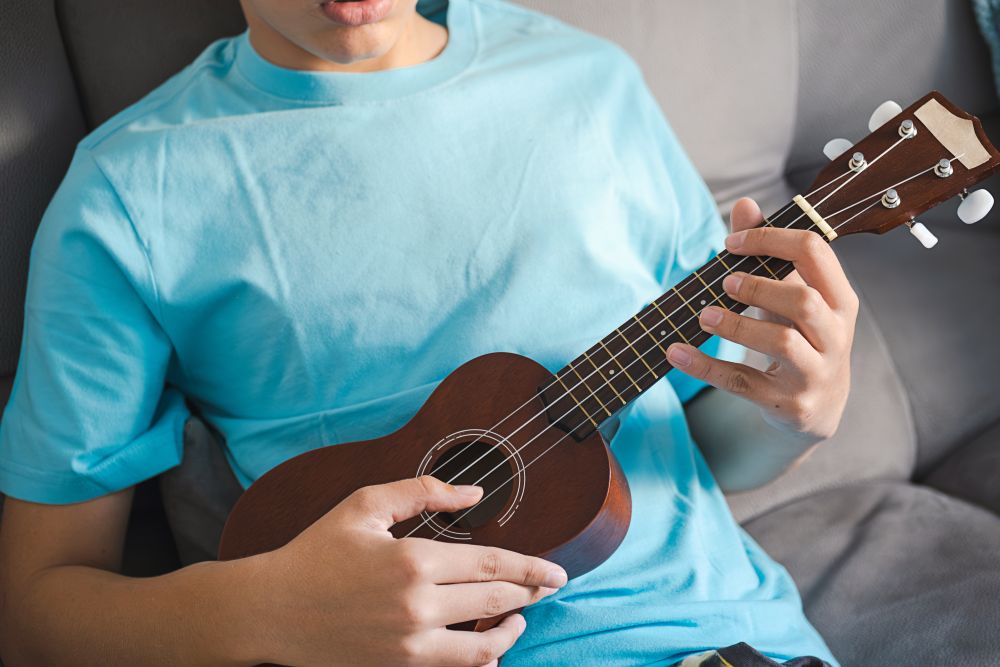
Beginners start with how to hold the instrument against the body, how to strum with the thumb or index finger and how to tune the four strings. The first chords are usually C, A minor, F and G, which between them unlock a large number of simple songs. By the end of the first month most students can change between two or three chords, slowly, while keeping a steady strum.
Strumming, Rhythm and Singing Along
The ukulele is mainly an accompanying instrument, so rhythm sits at the centre of learning it. Students practise even down strums first, then add up strums and simple patterns. Singing while strumming is harder than it looks and is introduced early because it trains coordination. Good ukulele classes for children use songs the class already knows, which removes one difficulty and lets them concentrate on their hands. Shy children often sing more readily with an instrument to hold than without one.
Group or Individual Lessons
The ukulele lends itself to group teaching. Playing together covers individual slips, makes a fuller sound and gives children the experience of keeping time with others. Individual lessons suit a child who wants to move faster, an older beginner with specific goals or someone who finds groups distracting. Ask how the teacher handles a class of mixed ability, since a group that moves at the pace of its slowest or fastest member will frustrate the rest.
Age and Readiness
Many schools accept children from around five or six, when fingers are strong enough to press a string and attention can last for a short class. A child who can follow a two-step instruction, sit for fifteen minutes and shows interest in music is usually ready. For younger children, sessions of thirty minutes are generally enough. Teenagers and adults starting from nothing can take longer lessons and will typically cover the same ground more quickly, with more attention to technique.
Practice at Home
Ten minutes a day is sufficient for a young beginner and far more effective than an hour once a week. Leave the ukulele somewhere visible and within reach, not shut in a case. Asking a child to show what was learned, or singing along while they strum, is support enough. Fingertips may be tender at first, though far less than on guitar. If practice becomes a daily argument, tell the teacher, who can adjust the material or set smaller goals.
Moving Beyond Basic Chords
After the first few months students meet more chords, including shapes that need three fingers, and begin to pick individual strings instead of only strumming. Fingerpicking patterns add texture, and simple melodies can be read from tablature. Some go on to chord melody playing, where tune and harmony are combined. Others treat the ukulele as a stepping stone to guitar. A teacher should discuss where a student is heading after six months or so, not simply repeat the same level of songs.
What to Look for in a Class
Watch or ask about a typical lesson. Children should spend most of it playing, not waiting. The teacher should tune the instruments at the start, correct hand position gently and keep the pace varied. Check class size, whether instruments are provided for the first sessions and how parents are told about progress. A term-end sharing session, where children play a song for families, gives them a goal without the pressure of a formal examination.
Deciding Where to Start
Book a trial class and see how your child, or you, respond. Enthusiasm afterwards is a better guide than any brochure. Confirm the schedule suits the family week, since tired children after a long school day learn little. Ask which size of instrument to buy and whether the school can advise on a model. If the teacher is patient, the group is small and students leave able to play something, however simple, you have found a sound place to begin learning the ukulele as a first instrument.


